


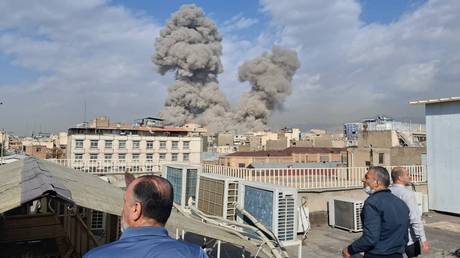
 The Middle East is on the brink of all-out chaos that will shatter the remnants of balance and change the face of the region forever
The Middle East woke up on February 28, 2026, to a new phase of open warfare between Israel, the US, and Iran, the kind of escalation that many officials had warned about in private for months and that many observers have repeatedly described in public as the most dangerous possible outcome of the collapsing regional order.
Israel announced it had launched a pre-emptive strike against Iran, framing the operation as an effort to neutralize what it described as imminent threats tied to Iran’s missile and nuclear programs. Within hours, multiple major outlets were reporting that the US was not simply backing Israel diplomatically but was actively participating in strikes, with Washington describing the campaign in sweeping terms that implied objectives well beyond a narrow, one-night military raid.
If there is one immediate conclusion that can be drawn from the first reports and official statements, it is that diplomacy was not merely failing in the background. It was being overtaken by force at the very moment when some mediators were still describing negotiations as salvageable. In the days leading up to Saturday, there had been indirect talks and reports of serious, extended rounds of discussion. Oman’s foreign minister even suggested that peace was within reach and that diplomacy should be allowed to do its work. Yet Saturday morning’s coordinated strikes, described by Israeli officials as planned for months and coordinated with Washington, point to a different reality, one in which the political leadership in Washington and West Jerusalem had already chosen coercion over compromise and selected a date weeks in advance.
That is why the core political argument many analysts have made for years now returns with renewed force. The central question has not been whether Iran’s policies are confrontational or whether its regional posture alarms its neighbors. The question has been whether the leading Western and Israeli decision-makers truly sought a negotiated framework that would trade limits and inspections for sanctions relief, or whether they viewed any durable agreement with Tehran as strategically undesirable because it would stabilize Iran, normalize parts of its economy, and reduce the justification for continued pressure. The early contours of this campaign, especially the public rhetoric emerging from Washington about giving Iranians a chance to topple their rulers, aligns more closely with a strategy of weakening the Iranian state than with a limited operation designed only to force compliance at the negotiating table.
What is known so far about the military sequence is still incomplete and in flux, but several elements are already consistent across multiple credible reports. Explosions were reported in Tehran and other locations, and Israel said it struck Iran in what it called a preventative move. Israel also took sweeping domestic emergency steps, including the closure of airspace and restrictions affecting daily life, signaling that it anticipated immediate retaliation. Reuters reported that Iran’s supreme leader was moved to a secure location, an extraordinary detail that suggests either fear of decapitation strikes or at minimum a belief inside Iran’s leadership that the operation was aimed at the regime’s command core, not only at launchers and depots.
From Washington, the messaging was even more expansive. The Pentagon named the US strikes Operation Epic Fury, while President Donald Trump described major combat operations and framed the campaign as intended to destroy Iranian missile capabilities and prevent Iran from obtaining a nuclear weapon, with language that also implied regime-change ambitions. Whatever one thinks of Iran’s intentions, it is notable that at least one prominent report stressed that Iran has long insisted it do

