Jemima Warner followed her husband into war. She didnt know shed take his place when he fell.
Jemimas husband, James Warner, was an original member of the Continental Army and served in the 1st Pennsylvania Rifle Regiment. These crack-shot riflemen were among the best marksmen in Washingtons army. Many had been longhunters who lived and hunted beyond the Allegheny Mountains and often had to battle Native Americans. Their woodcraft, scouting skills and expert marksmanship helped pioneer many aspects of early American special operations. In the fall of 1775, Col. Benedict Arnold tapped them to help move his army through the Maine wilderness to attack Quebec.
Handsome, athletic and no more than 25 years old, James Warner was accompanied by his beautiful 17-year-old bride on the ill-fated journey. She was among a small group of women in the force known as camp followers. Two such women marched with the Pennsylvanians.
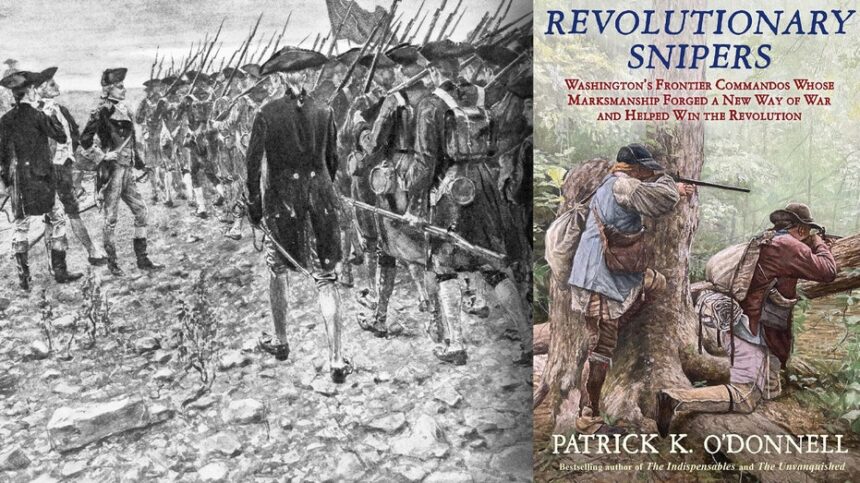
The full story of these remarkable riflemen and the role of the Pennsylvania long rifle in helping win the Revolutionary War can be found in my newest bestselling book, “Revolutionary Snipers: Washingtons Frontier Commandos Whose Marksmanship Forged A New Way of War and Helped Win the Revolution,”the third book in a trilogy on the elite units of the war.
This groundbreaking look at the Revolutionary War recounts the untold story of the Continental Armys first soldiers in an immersive “Band-of-Brothers”-style narrative that puts the reader in the boots of these snipers, who preceded todays U.S. Army special operators. The book is also the first time the full story of Jemima Warner has been told.
AMERICA HAS FOUNDING FATHERS. A CATHOLIC SAINT WAS A FOUNDING MOTHER
In general, camp followers, known as “Mollies,” had a complicated relationship with the military hierarchy. Many officers despised having these wives, mothers, daughters, mistresses and their children along, believing that they distracted the soldiers, slowed their movements and consumed food that could have fed the men.
Others were more pragmatic, noting that the men might not keep fighting if they couldnt bring their wives. Washington wrote that he “was obliged to give Provisions to the extra Women in these regiments, or lose by Desertion, perhaps to the enemy, some of the oldest and best Soldiers in the Service.”
EXPERTS FINALLY SOLVE MYSTERY OF TEENAGE REVOLUTIONARY WAR SOLDIER 246 YEARS AFTER HIS DEATH
Camp followers also provided valuable services to the Continental Army. Many worked as laundresses, earning rations and small fees for their labor. Others cooked or served as nurses. A while working as cooks or laundresses.
But the intrepid Jemima found herself doing more.
SECRETS OF REVOLUTIONARY WAR BATTLEFIELDS EMERGE 250 YEARS AFTER AMERICA’S FOUNDING
She had already marched hundreds of tortuous miles with the company when she found her husband at the foot of a tree, refusing to move, telling her he was “determined to die.”
The 350-mile march from New England to had become a grueling journey marked by starvation, torture and despair. The battle aga